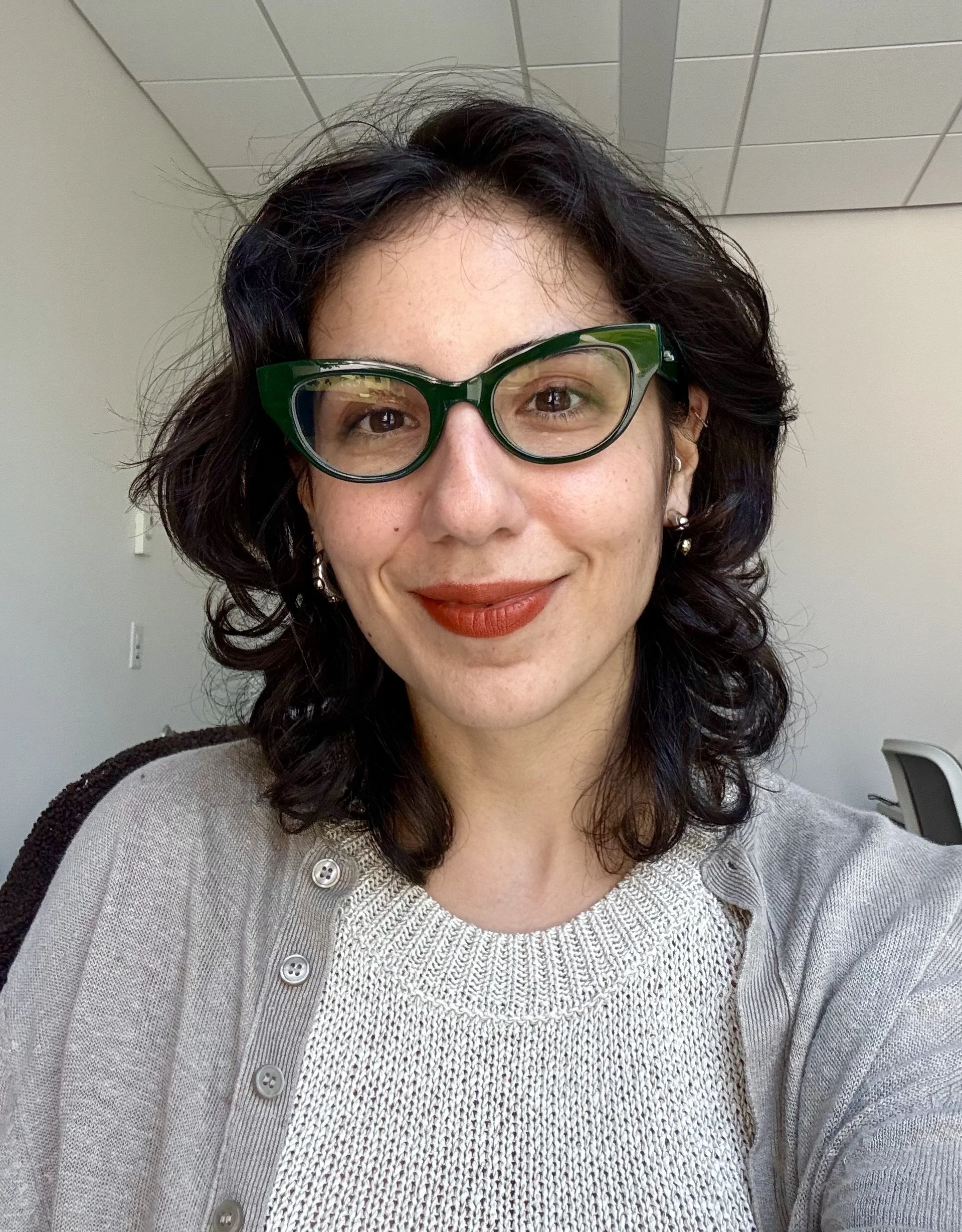
I'm a historian and visual artist who lives between Istanbul and the Northeast Corridor of the United States. I was born in Istanbul and grew up in the suburbs of Long Island. I went to Wesleyan University on a QuestBridge scholarship, where I studied in the interdisciplinary College of Social Studies. My honors thesis on the Gezi Park Protests won my department's best thesis award, but the bigger prize was what it left me with: a lasting fascination with how the past shapes the present. After graduating in 2016, I taught history at Saint Ann's School in Brooklyn for a few years while completing an MA in Historical Studies at the New School for Social Research. In 2019, began my Ph.D. in the joint History and Middle Eastern Studies program at Harvard University, where I taught a range of classes in Ottoman, Middle Eastern, and Islamic history.
My research interests are wide-ranging, and I'm drawn to the questions that existing scholarship has left unanswered. This tendency led me, by way of the Ottoman State Archives, to a cluster of metal mines in eastern Asia Minor. My dissertation project, The Imperial Minescape: Labor, Nature, and the Pursuit of “Cheap” Metal in the Eighteenth-Century Ottoman Empire, asks how the Upper Euphrates Valley was transformed into what I call an imperial minescape over the long eighteenth century. At the silver, gold, copper, and lead mines of Keban and Ergani—established in the 1720s under the Imperial Mint—extraction did more than draw revenue from the earth. It reorganized the surrounding landscape, inhabitants, forests, arable land, and animals into a single field of extraction, binding geology, labor, nature, and state in the effort to turn rock into coins, weapons, and imperial revenue.
Working outward from three previously unexamined document collections, I follow the mines' daily workings alongside the lives caught up in them: furnace-owning miners who slid into debt bondage, peasants compelled to provision grain and charcoal, sarrafs and financiers, militias, rebels, and semi-nomadic mule drivers. Drawing on political ecology, labor history, and the historical-materialist tradition, I argue that coercion and market exploitation coexisted in the mining economy without either becoming generalized—a reading that resists the familiar teleology in which any trace of free labor signals a march toward capitalism. Instead, I take the imperial state as playing a role analogous to that of early modern merchant capital, advancing credit to small producers as a means of extracting surplus and, over time, dispossessing them.
As a historian, I'm drawn to the seemingly mundane stories of ordinary people, animals, landscapes, and materials that reveal how political and economic systems functioned in the past. I work across a wide range of archives and reading strategies: fiscal and legal records, petitions, technical and scientific reports, visual and material evidence, and the traces left on the landscape itself. Reading these sources against the grain and against one another, I try to recover the lives and labor that official accounts tend to flatten into numbers, letting overlooked objects and actors set the terms of the analysis rather than the categories I inherit. Attentive to how economic structures shape social relations, attitudes toward the material world, and political expression, I aim to theorize from the ground up and generate new historiographical forms rooted in the objects I study.
I co-convene the interdisciplinary Minescapes Working Group, part of the Consortium for the History of Science, Technology, and Medicine, which meets monthly to workshop new work on extraction across different times and places. I am currently a Postdoctoral Research Associate at the Watson School and the Department of History at Brown University, where I am working on my first book on the relationship between global silver flows and domestic mining in the Ottoman Empire from the sixteenth to the eighteenth centuries.
For any questions or queries, please send me an email at contact@derenertas.com.